
Starting a one-truck plumbing business takes grit. You wake up early, answer your own calls, and handle everything from drain cleaning to water heater installs. But there comes a moment when you realize you are the bottleneck. If you aren't turning the wrench, the money stops flowing.
Scaling from a one-man operation to a multi-crew company is the dream, but it is also the most dangerous transition in the trades. You aren't just adding a truck; you are building a business. Here is your blueprint for scaling a one-truck plumbing business without losing your shirt—or your sanity.
The Shift: From Technician to CEO
The hardest part of scaling is mental. You are currently the best plumber you know. But if you want to grow, you have to stop being the best plumber and start being the best manager.
You need to transition from an hourly mindset to a systems mindset. When you are a one-truck show, your revenue is capped by the number of hours you can physically work. To scale, you have to sell the job, not your time.
According to the Bureau of Labor Statistics, the median pay for plumbers is roughly $60,000 a year, but a successful multi-crew plumbing owner can net $150,000+ by leveraging a team.
This shift requires you to stop doing the work and start working on the business. You need to write down every process you have in your head—from how you quote a job to how you clean up—so that someone else can do it exactly the way you do.
Step 1: Systemize Your Operations Before You Hire
Do not hire your first employee until you have your standard operating procedures (SOPs) documented. If you hire a plumber and just say, "Do what I do," you will get inconsistent results, angry customers, and callbacks.
Start with your "Big Three" processes:
The Estimate Process: How do you price a job? Do you use flat rate or time and material? Write down your exact formula for overhead, labor, and materials.
The Customer Experience: What do you say when you walk in the door? How do you protect the customer's floors? What does your invoice look like? Standardize the "white glove" experience.
The Callback Protocol: What happens when a job fails? Who answers the phone? How do you document the fix?
Once you have these in a binder or a Google Doc, you have a training manual. This is the foundation that allows you to sleep while someone else drives the truck.
Do not hire your first employee until you have your standard operating procedures (SOPs) documented. If you hire a plumber and just say, "Do what I do," you will get inconsistent results, angry customers, and callbacks.
Start with your "Big Three" processes:
The Estimate Process: How do you price a job? Do you use flat rate or time and material? Write down your exact formula for overhead, labor, and materials.
The Customer Experience: What do you say when you walk in the door? How do you protect the customer's floors? What does your invoice look like? Standardize the "white glove" experience.
The Callback Protocol: What happens when a job fails? Who answers the phone? How do you document the fix?
Once you have these in a binder or a Google Doc, you have a training manual. This is the foundation that allows you to sleep while someone else drives the truck.
Step 2: Hire for Attitude, Train for Skill
When you are ready to hire, resist the urge to hire a master plumber with 20 years of experience. They are expensive, and they often have bad habits that are hard to break. Instead, look for a licensed journeyman with a good attitude and a desire to learn your specific systems.
You are not just hiring a technician; you are hiring a brand ambassador. They will be wearing your logo and talking to your customers. You can teach a good plumber your pricing structure, but you cannot teach someone to be honest, punctual, and friendly.
Pro Tip: Before you hire, make sure your accounting is set up for payroll. You need to register for an EIN, get workers' comp insurance, and set up a payroll service. This is a non-negotiable cost of doing business.
Step 3: The "Second Truck" Financial Trap
The biggest mistake plumbers make when scaling is buying a brand-new $80,000 work truck with a full wrap and a $2,000 tool package—before they have the cash flow to support it.
Your goal is to get the second truck generating revenue with minimal debt. Consider a used van or truck that is reliable but not flashy. You need to get the employee out on the road to generate income immediately.
The average cost to outfit a plumbing truck (vehicle + tools + inventory) is between $30,000 and $50,000. Financing this without a guaranteed revenue stream is how small plumbing companies go bankrupt.
A better strategy is to sell the maintenance contract first. Before you hire, build a base of recurring customers (like a property management company) who guarantee a certain number of hours per week. That way, the second truck has a baseline of work from day one.
Step 4: Master the Art of Dispatching and Communication
Once you have two trucks, communication becomes your biggest challenge. You can no longer rely on shouting across the shop. You need a dispatch system.
You need a scheduling software that allows you to see where your techs are, what jobs are pending, and what parts are on the truck. This software is the "traffic controller" for your business.
Morning Huddles: Have a 10-minute meeting every morning to assign jobs and check parts inventory.
Real-Time Updates: Use a CRM (Customer Relationship Management) tool that sends text updates to customers so they know when the tech is arriving.
Photo Documentation: Require techs to send photos of the job site before and after to keep quality control high.
Without this infrastructure, you will spend your days putting out fires instead of growing the business.
Step 5: Stop Competing on Price, Start Competing on Brand
When you were a one-truck show, you might have undercut the big guys to get your foot in the door. But to scale, you need higher margins.
A multi-truck operation costs more to run. You have payroll taxes, insurance premiums, and office expenses. If you are still pricing like a "guy with a van," you will be working for free.
Raise your rates: Position yourself as the premium, reliable choice. Emphasize your licensing, insurance, and background checks.
Sell memberships: Offer a maintenance club where customers pay a monthly fee for priority service and discounts. This creates predictable, recurring revenue.
Leverage reviews: A steady stream of Google reviews allows you to charge more because your social proof is higher.
Your brand is no longer "Joe the Plumber." It is "The Team That Shows Up on Time and Fixes It Right the First Time." That is worth a premium.
When you were a one-truck show, you might have undercut the big guys to get your foot in the door. But to scale, you need higher margins.
A multi-truck operation costs more to run. You have payroll taxes, insurance premiums, and office expenses. If you are still pricing like a "guy with a van," you will be working for free.
Raise your rates: Position yourself as the premium, reliable choice. Emphasize your licensing, insurance, and background checks.
Sell memberships: Offer a maintenance club where customers pay a monthly fee for priority service and discounts. This creates predictable, recurring revenue.
Leverage reviews: A steady stream of Google reviews allows you to charge more because your social proof is higher.
Your brand is no longer "Joe the Plumber." It is "The Team That Shows Up on Time and Fixes It Right the First Time." That is worth a premium.
Step 6: The Office Manager is Your MVP
You cannot answer the phone while you are on a roof fixing a vent pipe. Once you scale past two trucks, you need a dedicated office manager or dispatcher.
This person is the gatekeeper. They handle the phone calls, schedule the jobs, send the invoices, and chase down payments. This is the first hire that doesn't generate revenue directly, but they protect the revenue you have by ensuring no call goes unanswered.
Studies show that 85% of customers will choose a competitor if they have to leave a voicemail and wait for a call back. An office manager ensures you capture those leads immediately.
This role can start as a part-time virtual assistant or a remote bookkeeper, but eventually, you need someone in the office full-time to handle the chaos of a growing business.
Step 7: Use Technology to Scale (Without Hiring More People)
You don't need to hire a marketing agency or a full-time accountant to scale. You need to leverage software to automate the mundane tasks.
Scheduling Software: Tools like ServiceTitan or Housecall Pro handle dispatching, invoicing, and payment processing.
Marketing Automation: Use email sequences to follow up with past customers for seasonal maintenance (like winterizing pipes).
AI Assistance: This is where a text assistant for contractors becomes invaluable. Instead of hiring a 24/7 call center, you can use AI to handle after-hours inquiries, book appointments, and answer FAQs instantly.
By automating the "busy work," you free up your capital to invest in more trucks and more techs, rather than more overhead.

Coordinating multiple crews requires centralizing your communication and scheduling.
Step 8: Manage the "Cash Flow Crunch"
Growth eats cash. When you have a one-truck business, you get paid on Friday and pay bills on Monday. When you have a three-truck business, you have payroll every week, but you might not get paid for a commercial job for 30 to 60 days.
You need to build a cash reserve before you scale. Aim for at least 3 months of operating expenses in the bank. This safety net allows you to survive the slow season and the gap between invoicing and collecting.
Consider offering a small discount for same-day payment or credit card payments to speed up your cash conversion. The faster you get paid, the faster you can reinvest in the next truck.
Step 9: Build a Culture of "No Callbacks"
As you scale, your quality control will slip if you don't build a culture of accountability. A callback is not just a loss of money; it is a loss of reputation.
Install a QC Checklist: Have the techs take a photo of the final work (e.g., the new water heater) and send it to the office before they leave.
Track Your Callback Rate: Measure how many jobs come back for a fix within 30 days. If it is above 2%, your training is lacking.
Reward the Fix: Pay a small bonus for techs with zero callbacks in a month. This incentivizes them to take their time and do it right the first time.
Your reputation is the only thing that allows you to scale. Protect it fiercely.
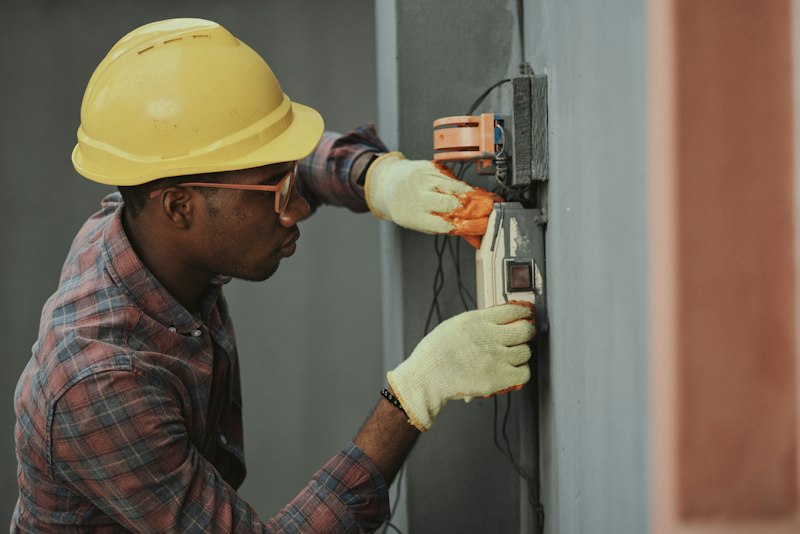
Maintaining quality standards across multiple crews requires documentation and accountability.
Step 10: Reinvest Your Profits Strategically
When the money starts rolling in, it is tempting to buy a new boat or upgrade your personal truck. Don't do it. The first $50,000 of profit should go right back into the business to fuel the next stage of growth.
Invest in a Service Vehicle: The next truck.
Invest in Training: Send your techs to manufacturer training for tankless water heaters or HVAC cross-training.
Invest in Marketing: Take the money you saved by not hiring a full-time marketer and put it into Google Ads or a new website.
The goal is to reach $1 million in revenue. At that point, the business can sustain a general manager, and you can step back entirely. But you only get there by reinvesting every dollar you earn in the first few years.
When the money starts rolling in, it is tempting to buy a new boat or upgrade your personal truck. Don't do it. The first $50,000 of profit should go right back into the business to fuel the next stage of growth.
Invest in a Service Vehicle: The next truck.
Invest in Training: Send your techs to manufacturer training for tankless water heaters or HVAC cross-training.
Invest in Marketing: Take the money you saved by not hiring a full-time marketer and put it into Google Ads or a new website.
The goal is to reach $1 million in revenue. At that point, the business can sustain a general manager, and you can step back entirely. But you only get there by reinvesting every dollar you earn in the first few years.
The Bottom Line
Scaling a one-truck plumbing business is not about working harder; it is about working smarter. It requires you to step out of the field and into the office. It requires you to trust others with your brand and your customers.
The journey from one truck to five is a marathon, not a sprint. Focus on building the systems first, hiring the right people second, and managing your cash flow third. If you do that, you can turn your solo hustle into a thriving, multi-crew enterprise that works for you, not the other way around.
And remember, you don't have to do it all alone. As you step away from the dispatch phone, leverage technology to keep your communication sharp. A text assistant for contractors can handle the overflow, book the jobs, and keep your customers informed while you focus on steering the ship. Your future fleet is waiting.
Prybar helps trade businesses never miss a customer text again. Responds instantly, captures leads, books jobs — all while you work. Live in minutes.
Get Started →